Why Pet Dental Care Matters More Than You Think
Here's something most pet owners don't think about: dental disease is the single most common health condition in dogs and cats. By age three, approximately 80 percent of dogs and 70 percent of cats show signs of dental disease. The vast majority of pets are walking around with painful mouths, infected gums, or damaged teeth, and their owners have no idea.
The reason most pet owners miss it is simple. Pets are remarkably good at hiding pain. Your dog might be dealing with a cracked tooth or infected gum line and still eat dinner, still play fetch, still wag their tail when you walk in the door. Cats are even more stoic and will only stop eating when the pain becomes truly unbearable. By that point, the dental disease has usually progressed far beyond what a simple cleaning can fix.
At VMC Lakewood Ranch, pet dental care is one of the services we're most passionate about, because we see firsthand how much it changes pets' lives when their mouths are healthy. This guide covers everything you need to know: what dental disease actually is, how to spot the warning signs, what a professional vet dental cleaning involves and what it costs, and how to keep your pet's teeth healthy between visits.
What Is Pet Dental Disease?
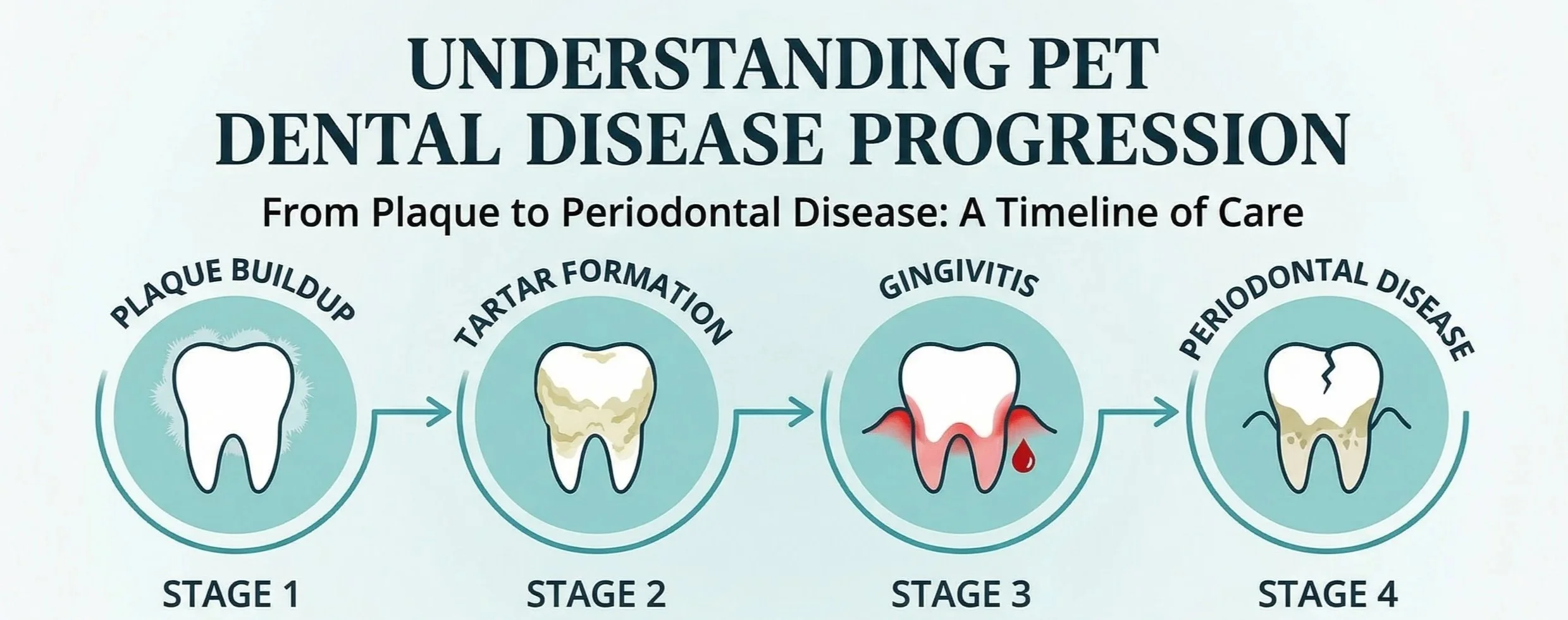
Pet dental disease follows a predictable progression, and understanding it helps you see why prevention matters so much.
It starts with plaque, a soft, sticky film of bacteria that forms on your pet's teeth after eating. In humans, we brush plaque away twice a day. Most pets don't get their teeth brushed at all, so that plaque sits there undisturbed. Within 24 to 48 hours, plaque begins hardening into tartar, a calcified deposit that bonds to the tooth surface and can't be removed by brushing alone.
Tartar buildup irritates the gum tissue, causing gingivitis, the red, swollen, tender gums you might notice if you lift your pet's lip and take a close look. Gingivitis is the early, reversible stage of dental disease. At this point, a professional cleaning can restore your pet's oral health completely.
But if gingivitis goes untreated, it progresses to periodontal disease. This is where things get serious. Periodontal disease attacks the structures that support the teeth: the gums, the bone, and the ligaments that hold each tooth in place. Teeth loosen. Roots become infected. Abscesses form. And the damage becomes irreversible without extraction.
Here's the part that surprises most pet owners: dental disease doesn't stay in the mouth. The bacteria that thrive in infected gums enter the bloodstream through the rich blood supply in the oral tissues. From there, they can travel to and damage major organs. Research has linked untreated dental disease in pets to heart disease, kidney damage, and liver problems. A dental infection isn't just a mouth problem. It's a whole-body health threat.
Signs Your Pet Has Dental Problems
Because pets hide pain so effectively, you need to know what to watch for. Here are the most common signs that your dog or cat may be dealing with dental disease.
Bad breath. This is the sign most pet owners notice first, and the one they're most likely to dismiss. "Dog breath" and "cat breath" are so common that many people assume it's normal. It's not. Healthy mouths don't smell bad. Persistent bad breath is caused by bacterial buildup and is one of the earliest and most reliable indicators of dental disease.
Red, swollen, or bleeding gums. Healthy gums are pink and firm. If your pet's gums look red, puffy, or bleed when they chew on toys, that's gingivitis, and it needs attention before it progresses.
Difficulty eating or dropping food. If your dog is suddenly eating more slowly, chewing on one side, or dropping kibble out of their mouth, they may be avoiding contact with a painful tooth. Cats with dental pain often approach the food bowl, show interest, and then walk away, or switch from dry food to only eating wet food because it's easier to manage.
Pawing at the mouth. Dogs and cats who paw at their face or rub their mouth against furniture or the floor may be trying to relieve oral discomfort. This is especially significant if it's a new behavior.
Loose or broken teeth. Sometimes dental disease progresses to the point where you can visibly see a loose tooth or a tooth that has fractured. If you notice a missing tooth, a chip, or a tooth that moves when your pet chews, schedule a veterinary exam promptly.
Excessive drooling. Some breeds drool naturally, but a sudden increase in drooling, especially drool that's thick, discolored, or has a strong odor, can indicate an oral infection or a painful lesion in the mouth.
Changes in behavior. Watch for unexplained irritability, reluctance to have their face touched, hiding (especially in cats), or a general decrease in energy. Pain changes behavior, and oral pain is no exception. If your pet's personality seems off and you can't pinpoint why, a dental exam is a smart place to start.
What Does a Professional Vet Dental Cleaning Involve?
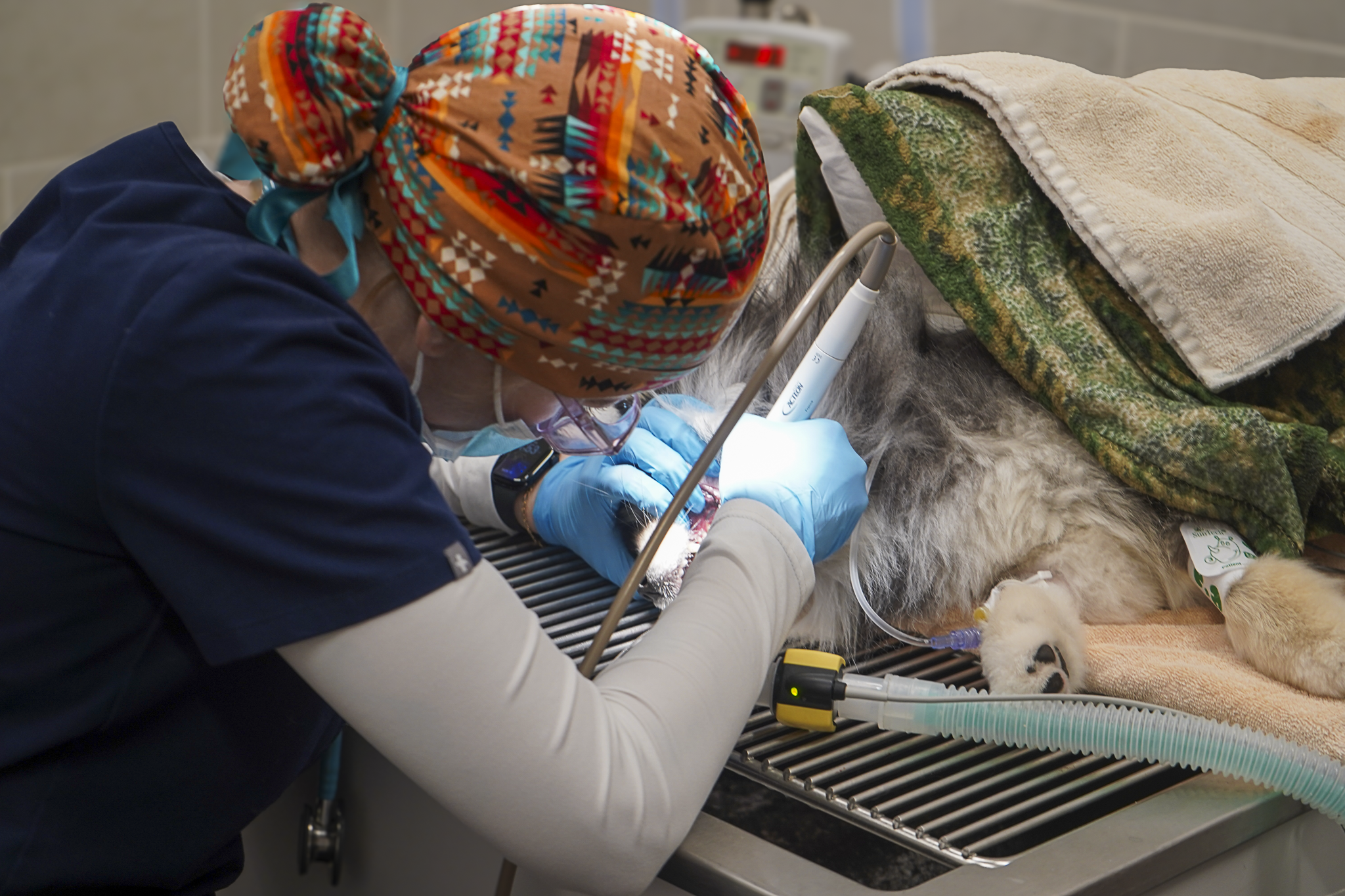
A professional dental cleaning for your pet is a thorough medical procedure, far more involved than a human dental cleaning. Here's what the process looks like at VMC Lakewood Ranch and what you can expect at each stage.
Pre-anesthetic bloodwork. Before any cleaning, we run blood tests to make sure your pet is healthy enough for anesthesia. These tests check organ function, blood cell counts, and clotting ability. For senior pets or those with known health conditions, we may recommend additional diagnostics. Safety always comes first.
General anesthesia. This is the part that makes some pet owners nervous, and we understand why. But anesthesia is essential for a thorough, safe dental cleaning. When your pet is under anesthesia, we can examine every tooth, clean below the gum line where most disease hides, take full-mouth dental X-rays, and perform extractions if needed, all without causing your pet stress or pain. Modern veterinary anesthesia is extremely safe, and your pet is monitored continuously by a dedicated team member throughout the procedure.
Full oral examination and dental X-rays. Once your pet is anesthetized, we perform a complete oral exam, probing every tooth, checking for pockets around the gum line, and looking for fractures, resorption, or other abnormalities. Full-mouth dental X-rays reveal what's happening below the gum line, where roughly 60 percent of dental disease hides. A tooth can look perfectly normal from the outside and have a severely infected root underneath. X-rays catch what the eye can't see.
Scaling and polishing. We use ultrasonic scaling instruments (the same technology used in human dentistry) to remove all plaque and tartar from above and below the gum line. After scaling, every tooth is polished to smooth the enamel surface. This smoothing step is important because rough surfaces attract new plaque buildup faster than smooth ones.
Extractions if needed. If a tooth is too damaged to save, whether from severe periodontal disease, fracture, or root infection, extraction is the kindest option. Leaving a painful, infected tooth in place causes ongoing suffering and continues spreading bacteria through your pet's body. Pets recover remarkably well from extractions and are often noticeably more comfortable and energetic within days.
Recovery and home care instructions. After the procedure, your pet wakes up in a warm, monitored recovery area. We provide detailed home care instructions, any necessary pain medication or antibiotics, and a follow-up plan. Most pets go home the same day and are back to their normal selves within 24 to 48 hours.
What Does a Dog Teeth Cleaning Cost?
The cost of a professional dental cleaning varies depending on the extent of disease, the number of extractions needed, and the level of pre-anesthetic workup required. We always provide a detailed estimate before the procedure so there are no surprises. It's worth noting that regular preventive cleanings are significantly less expensive than treating advanced dental disease, both financially and in terms of your pet's comfort.
At-Home Dental Care for Dogs and Cats
Professional cleanings are essential, but what you do at home between cleanings makes a significant difference in your pet's oral health.
Daily brushing. Yes, really. Daily tooth brushing is the gold standard of at-home dental care for pets. It removes plaque before it hardens into tartar, keeping your pet's mouth healthier between professional cleanings. Use a pet-specific toothbrush (or a finger brush) and pet-safe toothpaste and never human toothpaste, which contains ingredients toxic to pets. Start slowly, let your pet taste the toothpaste first, and gradually work up to brushing all tooth surfaces. Most dogs and cats can learn to tolerate brushing with patience and positive reinforcement.
Dental chews and treats. Look for products carrying the Veterinary Oral Health Council (VOHC) seal of acceptance. VOHC-approved products have been proven to reduce plaque and tartar buildup. Popular options include dental chews, dental sticks, and specially formulated dental diets. These aren't a replacement for brushing, but they're a valuable supplement, especially for pets who resist the toothbrush.
Water additives. Pet-safe water additives contain enzymes that help reduce bacterial buildup in your pet's mouth. They're tasteless and odorless, making them one of the easiest dental care products to incorporate into your routine. Like dental chews, they complement brushing rather than replacing it.
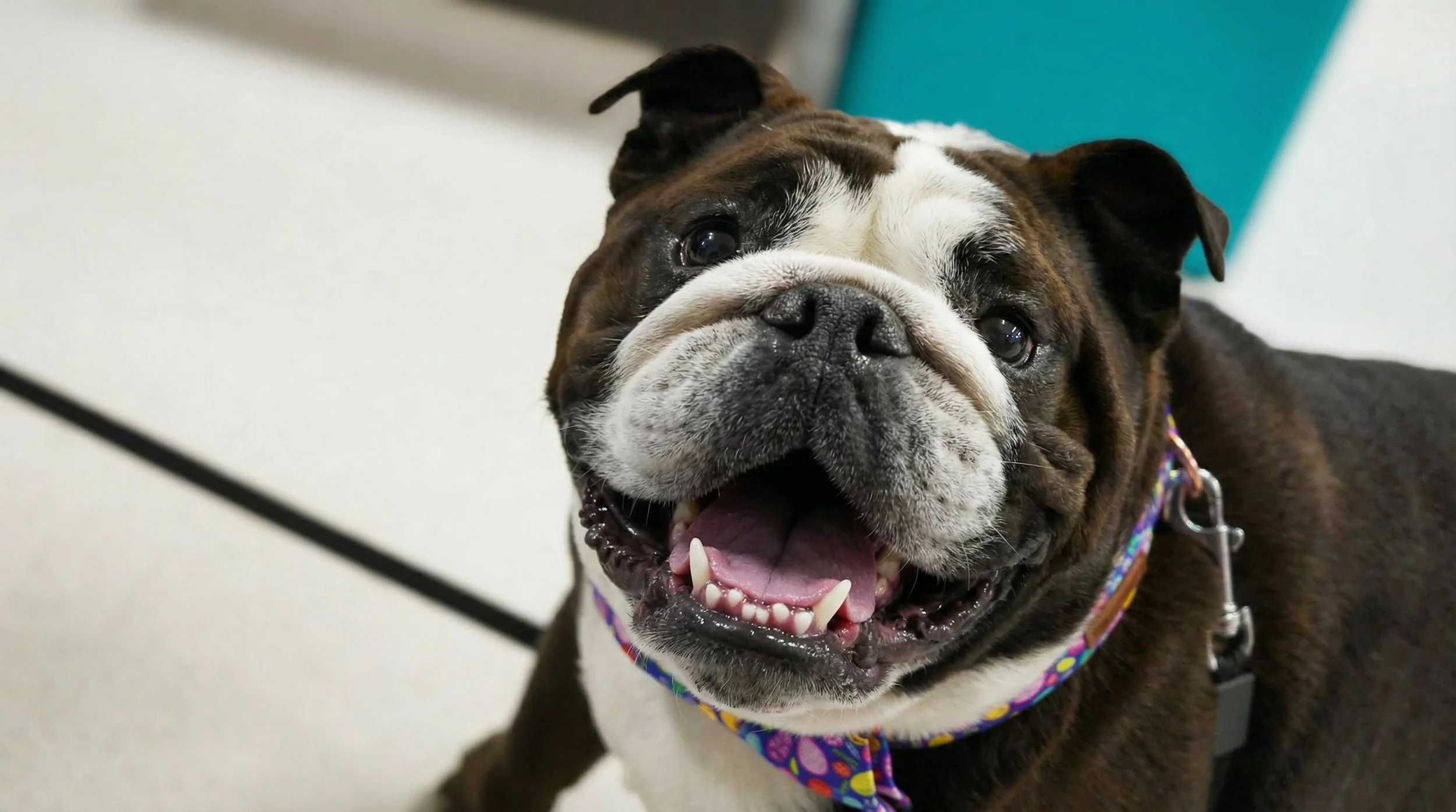
Regular oral checks at home. Get in the habit of lifting your pet's lips once a week and looking at their teeth and gums. You're checking for redness, swelling, bleeding, broken teeth, or unusual growths. The more familiar you are with what your pet's mouth normally looks like, the faster you'll notice when something changes. If you spot anything concerning, our team at VMC can take a closer look during a wellness visit.
How Often Does My Pet Need a Professional Dental Cleaning?
The general recommendation is an annual dental cleaning for most dogs and cats. However, some pets need more frequent care.
Small breed dogs like Yorkies, Chihuahuas, Dachshunds, and similar breeds are especially prone to dental disease due to tooth crowding in their smaller jaws. These dogs often benefit from cleanings every six to twelve months.
Senior pets may need more frequent dental attention as well. As pets age, their immune systems become less effective at fighting off oral bacteria, and existing dental issues can progress more quickly. If your senior pet is showing signs of aging-related changes, a dental evaluation should be part of their wellness plan.
Cat dental disease often involves a condition called tooth resorption, where the body gradually breaks down and absorbs the tooth structure. This is a uniquely feline condition that affects many cats over age five, and it's painful. Regular dental exams and radiographs are the best way to catch resorption early before it causes significant discomfort.
Brachycephalic breeds (flat-faced dogs like Bulldogs, Pugs, and French Bulldogs) also face higher dental disease risk due to their jaw structure and tooth alignment. These breeds benefit from early and consistent dental monitoring.
Your VMC veterinarian will recommend a cleaning schedule based on your individual pet's needs, breed, age, and current oral health status. There's no one-size-fits-all answer, and we tailor our recommendations to what's best for your pet.
Your Pet's Mouth Is a Window to Their Overall Health
Dental care isn't cosmetic. It's not about fresh breath or a pretty smile, though those are nice side effects. Pet dental care is about preventing pain, protecting vital organs, and giving your pet the quality of life they deserve. A healthy mouth means a healthier, more comfortable, longer-lived pet.
The most important thing you can do right now is take a look at your pet's mouth. Lift their lip, check the gums, and notice what you see. If it's been more than a year since their last dental evaluation, or if you've never had one done, it's time.
When was your pet's last dental check? Schedule a dental evaluation at VMC Lakewood Ranch and give your pet the gift of a pain-free, healthy mouth. Call (941) 739-1800 or visit lakewoodranchvet.com to book your appointment. Early detection makes all the difference, and your pet will thank you for it.